Introduction
In the hushed, opulent atmosphere of a high-limit casino room, a different energy prevails. There are no roaring crowds from the craps table, no triumphant shouts from a blackjack bust. Instead, a silent intensity hangs in the air, broken only by the soft rustle of cards and the murmured instructions of the dealer. This is the world of Baccarat, a game synonymous with elegance, high stakes, and an aura of impenetrable sophistication. For centuries, บาคาร่า has been the chosen pastime of aristocracy, spies, and high-rollers, often portrayed in film as the ultimate test of cool nerve and immense wealth. But beneath its polished veneer lies a game of startling simplicity, with odds that are among the most player-friendly in the entire casino. This blog post is your definitive guide to Baccarat. We will trace its aristocratic lineage, demystify its core rules and bets, delve into its strategic nuances, explore its cultural impact, and ultimately reveal why this “game of kings” has become a cornerstone of global gambling.
Subheading 1: A Storied Past: The Aristocratic Origins of Baccarat
Baccarat’s history is as rich and layered as the green felt on its tables. Its origins are debated, but most historians trace its lineage to Italy in the late 15th century. The game is believed to have been inspired by an old Etruscan ritual involving a nine-sided die, where the fate of a virgin priestess was decided by the roll. A more concrete ancestor is the Italian game “baccara,” meaning “zero,” a nod to the value of all tens and face cards. This version migrated to France in the late 15th century, where it captivated the French nobility under the names “Chemin de Fer” (Railway) and “Baccarat Banque.”
In Chemin de Fer, a tradition still alive in European casinos today, players themselves bank the game, passing the shoe counter-clockwise and competing against each other. Baccarat Banque features a more permanent banker. It was in these exclusive French salons that Baccarat’s reputation for elegance and high society was forged. The game crossed the English Channel, becoming a favorite of the British elite, and eventually sailed across the Atlantic. However, its complexity and association with the upper crust initially limited its appeal in the burgeoning American casino scene. It wasn’t until the 1950s, with the simplification of rules into “Punto Banco” in Havana and its subsequent adoption in Las Vegas, that Baccarat found its modern, streamlined form, opening its doors to a wider, yet still premium, audience.
Subheading 2: Punto Banco: Demystifying the Modern Game
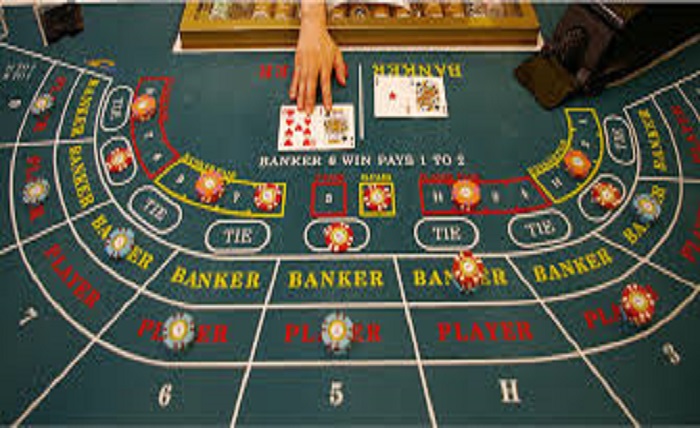
Today, the version played in nearly every casino in the Western world, from Macau to Monte Carlo to Las Vegas, is Punto Banco (Player-Banker). Forget complex strategies or bluffing; this is a pure game of chance, predicated on fixed drawing rules. The goal is fiendishly simple: bet on which of two hands—the “Player” (Punto) or the “Banker” (Banco)—will have a total closest to 9. A third bet, the “Tie,” is also available.
The value system is the first key to understanding Baccarat’s elegance:
- Cards 2 through 9 are worth their face value.
- 10s, Jacks, Queens, and Kings are worth 0.
- Aces are worth 1.
If a hand’s total exceeds 9, only the second digit counts. A 7 and an 8 total 15, but the hand value is 5. A 9 and a 6 total 15, making the hand value 5. This automatic “modulo 10” arithmetic eliminates any mental calculation for the bettor.
Two cards are dealt to both the Player and Banker boxes. Based on these initial totals, a strict, non-negotiable set of rules determines if either hand receives a third card. The player does not make any decisions after placing their bet. The dealer (or the electronic system) handles everything. This passivity is central to Baccarat’s appeal; you can sit back, enjoy the ceremony, and let fate take its course.
Subheading 3: The Unshakeable Core: Rules of the Third Card
The third-card rules seem arcane at first but are simply a programmed algorithm designed to create optimal play. They are not choices but mandates.
- Player Hand Rules: If the Player’s initial total is 0-5, they draw a third card. If it is 6 or 7, they stand. An initial 8 or 9 is a “natural,” and no further cards are drawn.
- Banker Hand Rules: The Banker’s action depends on their own total and the Player’s potential third card. They are more complex but follow a logical pattern:
- If Player did not draw a third card, Banker draws on 0-5 and stands on 6-9.
- If Player did draw a third card, the Banker’s action is determined by a table: e.g., Banker draws on 0-2, usually stands on 7, and draws or stands on 3-6 depending on the value of the Player’s third card.
Memorizing these isn’t necessary for play, but understanding they exist removes the mystery. The game is a fixed mechanical process once the bets are placed.
Subheading 4: The Mathematics of Elegance: Understanding the Odds and House Edge
Baccarat’s brilliance, from a gambler’s perspective, lies in its transparent and favorable odds. Let’s break down the three main bets:
- Betting on the Banker: This is the most famous wager in Baccarat. Statistically, the Banker hand wins slightly more often (about 45.86% of deals) than the Player hand (44.62%) due to the advantage granted by the third-card rules. However, casinos levy a 5% commission on winning Banker bets (typically tracked in a commission box). This brings the house edge down to a razor-thin 1.06%, making it one of the best bets in the casino.
- Betting on the Player: This bet wins 44.62% of the time and pays even money (1:1) with no commission. The house edge is slightly higher at 1.24%, but still exceptionally low.
- Betting on the Tie: This is the seductive sucker bet. It pays lavishly, usually 8:1 or 9:1, but it occurs only about 9.52% of the time. The house edge skyrockets to over 14% on an 8:1 payout and around 4.85% on a rare 9:1 payout. Professional advice is unanimous: avoid the Tie bet.
The conclusion is clear: for the strategic bettor, the Banker bet is the most efficient, despite the commission. For simplicity, the Player bet is a strong alternative. The Tie bet is purely for reckless thrill-seeking.
Subheading 5: Beyond Luck: Myths, Strategies, and Money Management
Because Baccarat is a game of independent trials (like roulette), no betting system can overcome the house edge in the long run. Yet, a rich culture of “strategies” and superstitions persists.
- The Myth of Patterns: Many players meticulously track results on provided “roadmaps” (Big Road, Bead Plate, etc.), looking for patterns like “Banker streaks” or “chops” (alternating wins). These are visual illusions; each hand is statistically independent. The “road” is a record of history, not a predictor of the future.
- Betting Systems: The Martingale (doubling your bet after a loss) and its variants are popular. While they can produce short-term gains, they risk catastrophic losses during a prolonged streak and bump against table limits.
- The Only True Strategy: Money Management. This is the real key. Set a strict loss limit and a win goal before you sit down. Treat your bankroll as the cost of entertainment. A common method is the “1-3-2-4” or “1-3-2-6” system on winning streaks, which aims to lock in profits without wild escalation. Most importantly, have the discipline to walk away.
Subheading 6: Baccarat’s Cultural Imprint: From Bond to Macau
No casino game has a more potent cultural cachet. Ian Fleming immortalized it as James Bond’s game of choice. In Casino Royale, the epic showdown between Bond and Le Chiffre isn’t at a poker table in the modern films, but at a Baccarat chemin de fer table in the novel. The phrase “Bond… James Bond” is uttered after winning a hand. This association cemented Baccarat as the ultimate game for the sophisticated, unflappable hero.
In Asia, particularly in Macau (now the world’s gambling capital, dwarfing Las Vegas), Baccarat is not just a game—it’s the engine of the industry, accounting for over 80% of casino revenue. The game is infused with cultural beliefs. The number 8 is considered lucky, and the seating arrangement, the handling of cards, and the rituals around the table are all steeped in superstition. High-roller “VIP” rooms in Macau are built around Baccarat, with staggering sums wagered per hand.
Subheading 7: The Modern Arena: Mini-Baccarat, Online Play, and Live Dealers
To make the game more accessible and faster, casinos invented Mini-Baccarat. It’s the same game with identical rules and odds, but played on a smaller blackjack-style table with lower minimum bets. The dealer handles all cards, and the pace is quicker. It stripped away the ceremony but opened the game to the masses.
The internet revolution further democratized Baccarat. Online casinos offer countless tables at all stakes, from pennies to thousands. The latest evolution is Live Dealer Baccarat, which streams a real human dealer from a studio or casino floor to your device. This blends the convenience of online play with the authenticity and social feel of a physical table, complete with chat functions and multiple camera angles. It has become wildly popular, offering varieties like “Speed Baccarat,” “No Commission Baccarat,” and games with side bets.
Conclusion: The Enduring Allure of the Game of Chance
Baccarat’s journey from Renaissance Italy to the smartphone screen is a story of enduring appeal. Its power lies in a potent contradiction: it is both simple and sophisticated, based purely on chance yet shrouded in strategic myth. It offers some of the best odds in the house while catering to the highest of high rollers. It requires no skill to play, yet demands immense discipline to play well.
Ultimately, Baccarat is a theater of chance. The slow reveal of the cards, the rigid ceremony, the quiet tension—it transforms gambling from a frantic activity into a contemplative ritual. Whether you’re a casual player trying Mini-Baccarat for the first time or a seasoned veteran tracking the shoe in a VIP salon, you are participating in a centuries-old tradition. You are not battling the house with complex decisions, but simply placing a wager on the immutable flow of luck. And in that elegant simplicity, watching the cards fall where they may, lies the timeless, captivating heart of Baccarat.
FAQs (Frequently Asked Questions)
- Is Baccarat a game of skill or luck?
Modern Punto Banco Baccarat is almost entirely a game of luck. Once your bet is placed, you have no control over the outcome. The drawing rules are fixed and automatic. Skill comes in only through effective bankroll management and choosing the right bets (i.e., avoiding the Tie). - What is the single best bet to make in Baccarat?
Statistically, the Banker bet is the best. Despite the 5% commission on winnings, it has the lowest house edge at approximately 1.06%. The Player bet is a very close second at 1.24%. You should consistently choose one or the other. - Why is there a commission on the Banker bet?
The Banker hand has a mathematical advantage due to the rules governing when it draws a third card. To correct this inherent bias and ensure the casino maintains a house edge, they charge a 5% commission on winning Banker bets. Without it, the bet would be in the player’s favor. - What’s the difference between Mini-Baccarat and the big table Baccarat?
The game rules and odds are identical. The differences are in atmosphere and procedure. The big table is larger, often allows players to handle the cards (in some regions), has higher limits, and a slower, more ceremonial pace. Mini-Baccarat is faster, played on a smaller table with lower minimums, and the dealer handles everything. - Are online Baccarat games fair?
Reputable online casinos use certified Random Number Generators (RNGs) for their digital Baccarat games, which are regularly audited for fairness. Live Dealer Baccarat adds another layer of trust, as you are watching a real physical game with real cards and a real dealer streamed in real-time. Always play at licensed and regulated online casinos.