
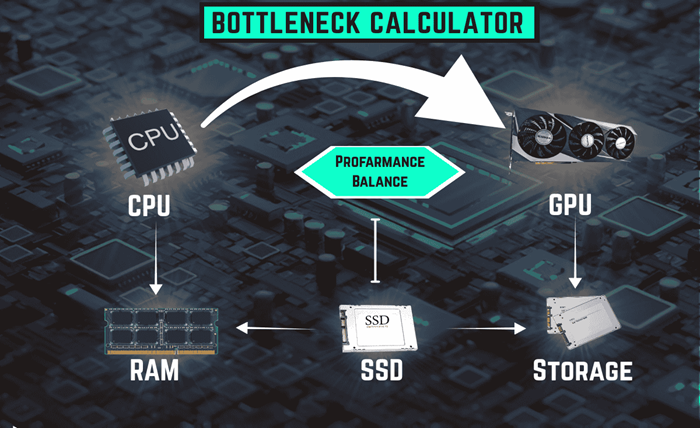
A bottleneck calculator is an online or offline tool designed to analyze how well your PC components work together, and a bottleneck calculator helps you understand whether your CPU, GPU, RAM, or storage is limiting overall system performance. In simple terms, a bottleneck calculator shows you which component is holding back the others, much like a narrow road slowing down traffic.
When gamers, content creators, or PC builders use a bottleneck calculator, they can quickly see if their processor is too weak for their graphics card or if the GPU is underutilized due to a slow CPU. A bottleneck calculator matters because modern applications rely on balanced hardware, and even expensive components can perform poorly if paired incorrectly.
Using a bottleneck calculator before upgrading or building a PC can save money and frustration. Instead of guessing which part to replace, a bottleneck calculator provides a clearer picture of real-world performance limitations and helps users make informed decisions.
How a Bottleneck Calculator Works Step by Step
A bottleneck calculator works by comparing the performance capabilities of your CPU and GPU, and a bottleneck calculator often factors in resolution, game type, and workload intensity. Most bottleneck calculator tools use databases of benchmark results to estimate how components perform together.
When you enter your hardware details into a bottleneck calculator, the tool simulates scenarios such as gaming, video editing, or multitasking. A bottleneck calculator then calculates the percentage at which one component limits the other, giving you an easy-to-understand result.
It is important to remember that a bottleneck calculator provides estimates rather than exact measurements. However, a bottleneck calculator is still extremely useful for identifying potential mismatches and guiding upgrade decisions, especially for users who do not want to run complex benchmarks themselves.
Benefits of Using a Bottleneck Calculator for PC Building
One of the biggest benefits of a bottleneck calculator is cost efficiency, because a bottleneck calculator helps you avoid overspending on components that your system cannot fully utilize. For example, pairing a high-end GPU with a low-end CPU often results in wasted potential, which a bottleneck calculator clearly highlights.
Another advantage of a bottleneck calculator is time savings. Instead of testing multiple configurations manually, a bottleneck calculator gives instant insights into compatibility and performance balance. This makes it easier for beginners and experienced builders alike to plan upgrades.
A bottleneck calculator also improves long-term system stability and satisfaction. By using a bottleneck calculator to build a balanced PC, users experience smoother gameplay, faster rendering times, and fewer performance drops during heavy workloads.
CPU vs GPU Bottlenecks Explained with a Bottleneck Calculator
A CPU bottleneck occurs when the processor cannot keep up with the graphics card, and a bottleneck calculator helps identify this situation clearly. In CPU-heavy tasks like strategy games or video encoding, a bottleneck calculator often shows high CPU usage with underutilized GPU power.
On the other hand, a GPU bottleneck happens when the graphics card is the limiting factor, and a bottleneck calculator highlights this by showing the CPU waiting for the GPU to finish rendering frames. This is common at high resolutions or in graphically demanding games.
By using a bottleneck calculator, users can understand whether they need a CPU upgrade, a GPU upgrade, or simply a settings adjustment. A bottleneck calculator simplifies this complex comparison into an easy percentage or recommendation.
Common Myths and Misunderstandings About Bottleneck Calculator Results
One common myth is that a bottleneck calculator result above a certain percentage is always bad, but a bottleneck calculator should be seen as a guideline rather than a strict rule. Every system has some level of bottleneck, and a bottleneck calculator simply points out where it exists.
Another misunderstanding is that a bottleneck calculator only applies to gaming PCs. In reality, a bottleneck calculator is equally useful for workstations, streaming setups, and productivity systems where CPU, GPU, and RAM balance is crucial.
Some users believe a bottleneck calculator replaces real-world testing, but a bottleneck calculator works best when combined with benchmarks and monitoring tools. Used correctly, a bottleneck calculator is a powerful planning aid rather than a definitive performance verdict.
How to Use a Bottleneck Calculator for Upgrades and Optimization
When planning an upgrade, a bottleneck calculator can show whether replacing a single component will significantly improve performance. For instance, a bottleneck calculator may reveal that upgrading RAM or switching to an SSD offers better gains than buying a new GPU.
A bottleneck calculator also helps optimize in-game and application settings. If a bottleneck calculator shows a CPU limitation, lowering CPU-intensive settings can improve performance without new hardware.
By regularly checking your system with a bottleneck calculator, you can adapt your PC to new software demands. This proactive approach ensures your system remains balanced and efficient over time.
Choosing the Best Bottleneck Calculator Online
There are many tools available, but choosing a reliable bottleneck calculator is essential for accurate insights. A good bottleneck calculator uses updated benchmark data and allows customization based on resolution and workload.
User-friendly design is another key factor, as a bottleneck calculator should present results clearly without overwhelming technical jargon. Transparency in how calculations are made also increases trust in a bottleneck calculator.
Ultimately, the best bottleneck calculator is one that aligns with your use case, whether gaming, streaming, or professional work. By selecting the right bottleneck calculator, you ensure more accurate planning and better performance outcomes.
Conclusion
A bottleneck calculator is an essential tool for anyone serious about PC performance, because a bottleneck calculator helps identify weaknesses, optimize upgrades, and avoid costly mistakes. Whether you are building a new system or improving an existing one, a bottleneck calculator provides clarity in a complex hardware landscape.
By understanding how a bottleneck calculator works and how to interpret its results, users can create balanced systems that deliver smooth, reliable performance. In a world of rapidly evolving technology, a bottleneck calculator remains a simple yet powerful ally for smarter PC decisions.
FAQs
1. What is a bottleneck calculator used for?
A bottleneck calculator is used to determine whether one PC component is limiting the performance of others, helping users balance their systems effectively.
2. Is a bottleneck calculator accurate?
A bottleneck calculator provides estimates based on benchmarks, and while not perfect, a bottleneck calculator is highly useful for planning upgrades.
3. Can a bottleneck calculator help with gaming performance?
Yes, a bottleneck calculator is especially helpful for gaming, as it shows whether the CPU or GPU is limiting frame rates.
4. Should beginners use a bottleneck calculator?
Absolutely, a bottleneck calculator is beginner-friendly and helps new PC builders avoid common hardware mismatches.
5. Do professionals also use a bottleneck calculator?
Yes, many professionals use a bottleneck calculator to design balanced workstations and optimize performance for demanding tasks.