In the competitive landscape of LED lighting, the difference between a mediocre fixture and a market-leading product often comes down to a single millimeter of plastic: the secondary optic. Whether it is a street light requiring a specific Type III distribution or a surgical lamp needing high CRI shadowless control, off-the-shelf lenses cannot always meet the unique constraints of every project.
This is where custom OPTICAL DESIGN SOLUTIONS become the critical differentiator. However, for many lighting OEMs, the barrier to entry for custom optics is perceived as too high—too expensive, too complex, and too risky. The industry is changing, though, as manufacturing partners evolve into engineering partners, bridging the gap between artistic vision and technical reality.
The Engineering Behind the Light
Creating a custom lens is not just about drawing a shape in CAD; it is a rigorous scientific process known as Precision Optical Engineering for Superior Lighting.
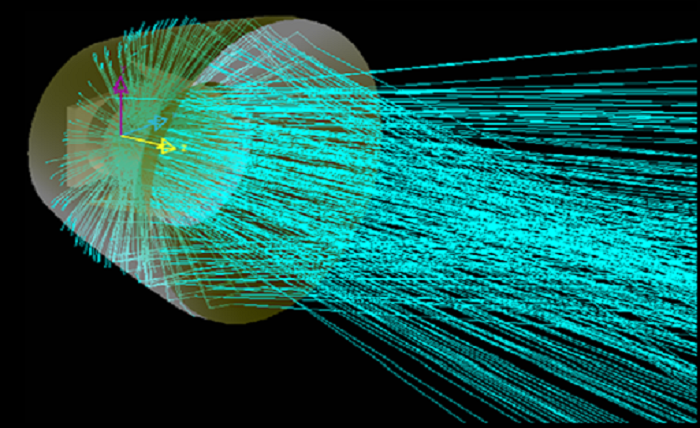
It begins with the “light source characterization.” Every LED chip (from Osram, Cree, Lumileds, etc.) has a unique emission pattern. An optical engineer must import the specific “Ray File” of the chosen LED into simulation software.
The process involves millions of calculations. The engineer manipulates the curvature of the lens surface to steer these rays. The goal is to achieve high optical efficiency (transmittance >90%) while strictly adhering to the mechanical constraints of the housing. This stage prevents costly mistakes, such as “hot spots” (glare) or “color separation” (rainbow effects), which are common in poorly engineered systems.
Design for Manufacturing (DFM): The Hidden Value
A major flaw in hiring independent optical design firms is the disconnect from production. A freelance designer might create a theoretically perfect lens that is physically impossible to mold. They might ignore “draft angles” (needed to eject the part from the mold) or “sink marks” (deformations caused by uneven cooling).
This is why partnering directly with a manufacturer like Asahi Optics is superior. Their engineers practice DFM (Design for Manufacturing) from Day 1. They ensure that the optical surface is optimized not just for light control, but for the injection molding process. This holistic approach reduces the risk of tooling revisions, which are the most expensive part of product development.
The Economics of “Free” Design
Traditionally, developing a custom lens involved paying a design firm thousands of dollars for the simulation, and then paying a mold maker separately for the tooling. If the part didn’t work, both parties would blame each other.
To disrupt this inefficient model, leading integrated manufacturers are now offering free Optical design services as part of a turnkey production package.
Here is how it works: Instead of charging an hourly rate for engineering, the manufacturer absorbs the design cost as an investment in the partnership. When the client commits to the tooling and mass production, the initial optical simulation and optimization are provided at no extra charge.
This model aligns the incentives of the buyer and the supplier. The manufacturer is motivated to get the design right the first time because they are the ones who have to build the mold. For the lighting brand, access to free Optical design support lowers the R&D budget significantly, allowing resources to be redirected toward marketing or sales.
Validating the Solution: Prototyping
Before cutting hard steel for the mold, the design must be validated. Advanced OPTICAL DESIGN SOLUTIONS include a prototyping phase.
Using diamond-turning (CNC) or high-resolution 3D printing (SLA/Polyjet), a physical sample is created. This allows the client to install the lens into their actual fixture and conduct a “reality check.” Does it fit the PCB? Does it clear the waterproof gasket? Is the beam angle visually correct?
This verification step is part of the Precision Optical Engineering for Superior Lighting workflow. It ensures that the IES files generated by the software match the real-world performance measured in the goniophotometer.
Conclusion: A Strategic Partnership
In the modern lighting industry, you should expect more from your lens supplier than just plastic parts. You should expect engineering leadership.
By choosing a vertically integrated partner—one who handles everything from the initial ray tracing to the final quality control—you gain access to world-class expertise without the overhead of an internal R&D department. Leveraging offers like free Optical design for qualified projects allows you to bring innovative, high-performance fixtures to market faster and more affordably than your competitors.